
Luciano Darderi meets Dalibor Svrcina in the second round of the 2026 US Open, with a place in the round of 32 on the line at Flushing Meadows. On paper it looks lopsided: Darderi is the world No. 22 and a seed, Svrcina a No. 114 qualifier who had to win three matches just to reach the main draw. The model reads it that way too — and this time the betting market does not. It prices Darderi at just 56¢, a coin-flip number for a match the model and the on-court evidence both say is nothing of the sort. That gap is the whole story.
What the model says
The model makes Darderi a 67.7% favorite, and even the conservative, market-blended number lands at 61.2%. Both sit comfortably above the 56¢ the market is charging. Yes, the ranking gap is a heavy input — No. 22 against No. 114 will always be. But this is one of those spots where the on-court signals back the number up rather than undercut it: the surface record, the recent form, and the rest all point the same way the ranking does. When the model and the eye test agree and the market lags both, the price is the mistake.
How to read this: This is an independent opinion, not betting advice. The model is one input; the final pick reflects the author’s tactical judgment. See the methodology and editorial standards.
Recent form & Injury
- Luciano Darderi (No. 22, career high No. 16): Rested and in rhythm. He won a clay title in the run-up, then took a walkover loss in his very next event — a scratched match, not a beating — which handed him a clean, well-timed break before New York. He came through the US Open first round over Harry Wendelken 6-2 3-6 6-2 7-5 on August 31 looking sharp. Crucially, the “clay specialist” label does not hold: Darderi reached the quarterfinals of the 2026 Australian Open — hard court, Grand Slam — so he has already proved he can go deep on this surface at a major. He did undergo a minor procedure in May and had a brief August pause, but he is healthy now, and the layoffs left him fresh rather than rusty.
- Dalibor Svrcina (No. 114, career high No. 86 in Nov 2025): Arriving hot but with mileage in the legs. He qualified by beating Felipe Meligeni Alves and Mackenzie McDonald, then survived a five-set opener over Valentin Royer 6-4 3-6 5-7 5-7 6-2 on August 31. Four matches in a week is a real run — and a real tax. The deeper this goes, the more that accumulated load tells against him.
This is the pivot of the whole read. Darderi’s one genuine vulnerability is consistency when he is fatigued — stack matches back-to-back and his level wobbles. But that is precisely the condition he is not in here. He arrives off a title and a walkover-induced rest; Svrcina arrives off four hard-fought matches in New York. If the fatigue script were going to bite, it is far likelier to bite the qualifier.
The tactical matchup
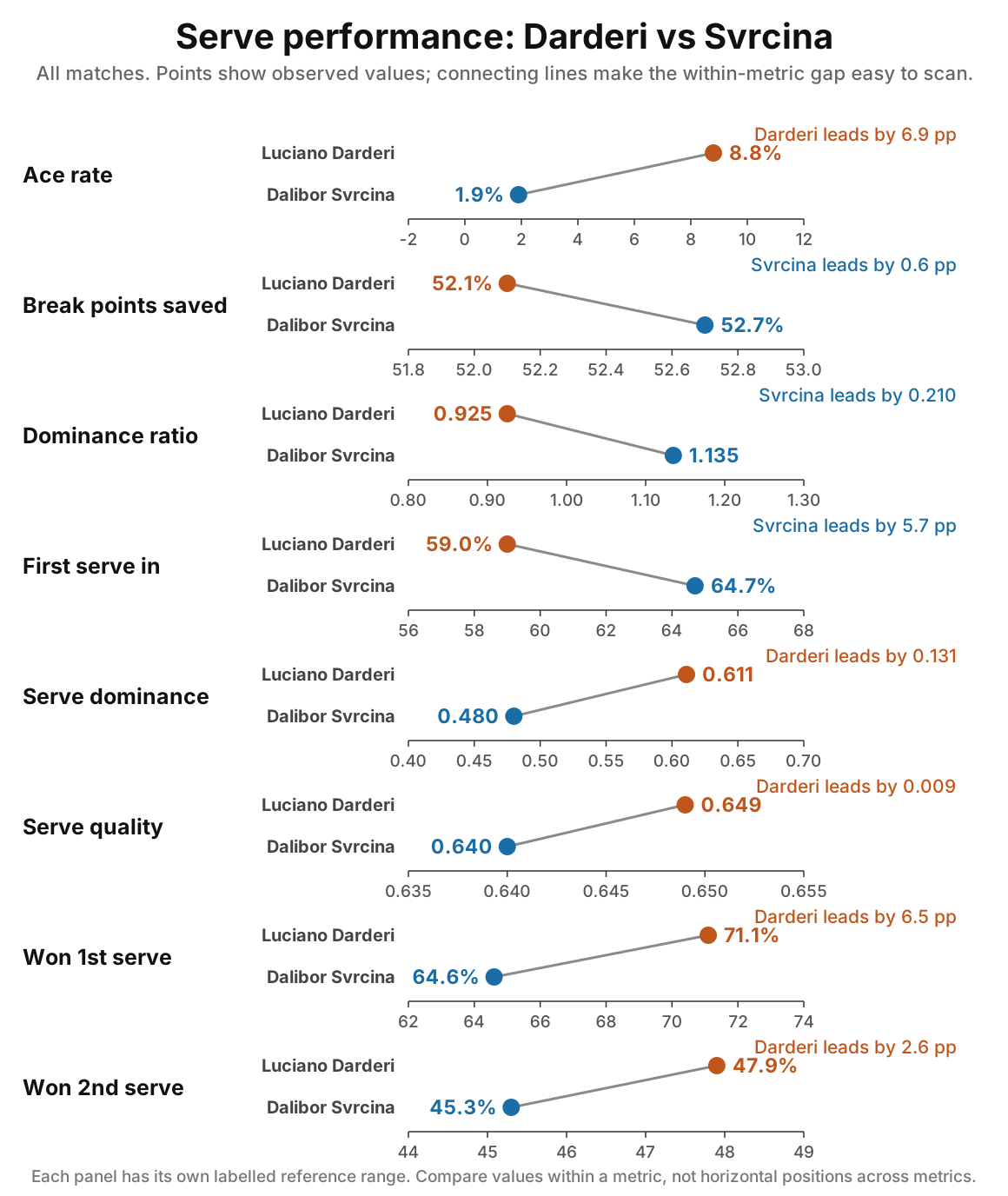
The serve panels reward Darderi across the board: he leads on aces, first- and second-serve points won, serve dominance, and serve quality. On a hard court that rewards free points behind the serve, that is exactly the edge you want to be holding. Svrcina’s one counter is a higher dominance ratio (1.135 vs 0.925), and it is a fair point — but it is banked largely against qualifying and challenger-level opposition, while Darderi’s number sits against a full tour-level slate. As for the head-to-head, Darderi leads 3–2. The book will point out that their lone hard-court meeting went the other way, but that is a single, dated data point against a man who has since reached a Grand Slam quarterfinal on hard. One result does not outweigh a season.
Sources & notes
- US Open men’s singles draw — event, round, and draw reference.
- ATP Tour rankings and player profiles — rankings, career highs, and tour statistics.
- Recent form and results cross-checked against ESPN Tennis, Ubitennis, Oasport, and SofaScore match reports for the US Open swing.
- Model figures and chart: The Alae’s in-house analysis. Inputs, scope, and limitations are described in the methodology.
Bottom line
I am backing Luciano Darderi — and I think the market is handing him out cheap. At 56¢, the price implies a near coin-flip, while the model sees 67.7% (61.2% market-adjusted). That is a five-to-twelve point edge on a favorite whose supporting case is not just a ranking line.
He is rested off a clay title, the walkover that followed cost him nothing but gave him a break, he came through his opener cleanly, and he has already been to a hard-court Grand Slam quarterfinal this season. His only real flaw is a wobble under back-to-back fatigue — and he is the fresh man here, not the one who just played five sets to qualify and again to open. The serve graphs favor him, the surface suits him, and the model likes him more than the market does. When the number, the form, and the rest all line up and the price still lags, the value sits with the favorite. Darderi wins this.